
Trusted by Global Tech Leaders to Disruptive Startups






Value we bring as your technology partner
We create tailor-made computer vision solutions that address your specific business challenges, ensuring maximum effectiveness and alignment with your unique objectives and requirements.
Our team of experts stays up-to-date with the latest research and advancements in computer vision technology, ensuring that we deliver innovative and state-of-the-art solutions to our clients with our computer vision services.
Our advanced analytics capabilities enable us to uncover hidden patterns and insights from your visual data, empowering you to make informed decisions and optimize your operations.
By automating manual processes and enhancing decision-making, our computer vision solutions can significantly improve efficiency, reduce operational costs, and increase your return on investment.
We are committed to developing and deploying computer vision solutions that prioritize ethical considerations, ensuring transparency, fairness, and responsible AI practices.
From initial consultation to implementation and beyond, we provide comprehensive computer vision services to ensure the success of your project, including training, maintenance, and ongoing assistance.
Our comprehensive computer vision offerings & solutions






Our computer vision services success stories

Developing an AI-based smart monitoring and anomaly detection system for oil & gas turbomachinery
Explore Case Study
Daffodil helps an urban planning firm to leverage AI and detect surface water bodies from geo-spatial data.
Explore Case Study
Developing an AI-powered telehealth application for a US-based health tech firm
Explore Case Study
Modernizing a CRM software for UK’s leading global FinTech firm
Explore Case Study
Developing a comprehensive EHR system for the largest eye care group in the United States
Explore Case Study
Developing a student record management system, enhancing India's education infrastructure
Explore Case StudyTake the first step towards unlocking valuable visual insights today!
Get in touch now!Industry best practices we follow

Data quality and annotation
Ensuring data quality and accurate annotation is crucial for the success of any computer vision project. High-quality data directly impacts the performance and accuracy of the developed models. To achieve this, it’s essential to have a diverse and representative dataset, clear and consistent labelling, and proper data augmentation techniques to minimize potential biases. By following industry best practices for data collection, curation, and annotation, you can significantly improve model performance and ensure reliable results.

Model selection and optimization
Choosing the right model and optimizing it for your specific computer vision task is a key industry practice. This involves selecting an appropriate algorithm or architecture, such as convolutional neural networks (CNNs) for image classification or region-based models for object detection. It also includes fine-tuning model parameters and employing techniques like transfer learning to leverage pre-trained models and reduce training time.

Security and privacy compliance
As computer vision projects often involve processing sensitive data, adhering to security and privacy standards is essential. This includes complying with relevant data protection regulations, such as the GDPR or HIPAA, and implementing industry best practices to safeguard data. Robust security measures, such as encryption for data storage and transmission, strict access controls, and regular security audits, help ensure data confidentiality and prevent unauthorized access.

Scalability and integration
Designing computer vision solutions with scalability and seamless integration in mind is a critical industry practice. As your business grows and your needs evolve, your computer vision solution should be able to adapt and expand accordingly. This involves using modular architectures, cloud-based infrastructure, and APIs to ensure compatibility with various systems and platforms. By planning for scalability from the outset with our computer vision services, businesses can minimize disruptions and costs associated with upgrading or replacing systems in the future.
How computer vision is transforming industry landscapes?

Healthcare
In the healthcare industry, computer vision helps in the analysis of medical images, such as X-rays, MRIs, and CT scans, enabling early detection of diseases and abnormalities. Furthermore, computer vision assists in surgical planning and navigation during minimally invasive procedures & detects anomalies in real-time, contributing to improved patient treatment & care.

Manufacturing
Computer vision has a significant impact on manufacturing processes. It streamlines operations, improves quality control, and optimizes production lines by automating visual inspection tasks, reducing human error, and increasing throughput. Additionally, computer vision identifies defects and irregularities in products, ensuring better quality assurance.

Retail
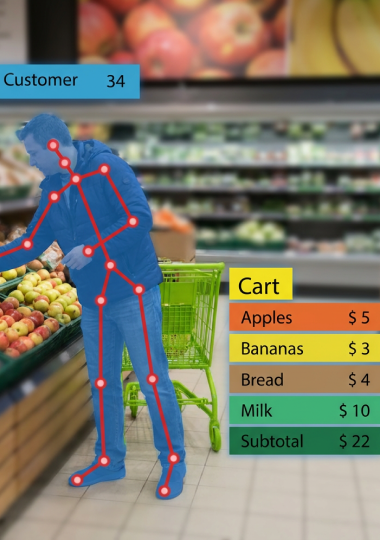
For the retail industry, computer vision applications enhance customer experiences, optimize store operations, and drive sales. They analyze customer demographics and behavior, enabling targeted marketing and promotions. Computer vision also automates inventory management through real-time tracking of products on shelves.

Security
By leveraging computer vision services, you can detect and track digital threats or suspicious activities in real-time, enhancing overall safety. It also helps to enable the implementation of biometric authentication systems, such as facial recognition, providing secure access control.

Unlock powerful computer vision capabilities with Daffodil Software
We leverage the latest advancements in the field of artificial intelligence and machine learning to create robust computer vision systems that drive innovation and improve efficiency. Our primary focus on quality, security, and scalability guarantees that the computer vision solutions we create are not only dependable but also future-proof, ensuring longevity and adaptability as new developments emerge in the world of AI and machine learning. This steadfast commitment to excellence allows our clients to stay ahead of the curve and maintain a competitive edge in their respective markets.
Unlock the full potential of artificial intelligence and machine learning, creating state-of-the-art computer vision solutions that drive innovation, streamline operations, and deliver tangible results. With Daffodil Software as your technology partner, you can trust that we will go the extra mile to ensure that your organization thrives in the rapidly evolving world of AI-powered technology.
Harnessing the combined power of AI/ML & computer vision
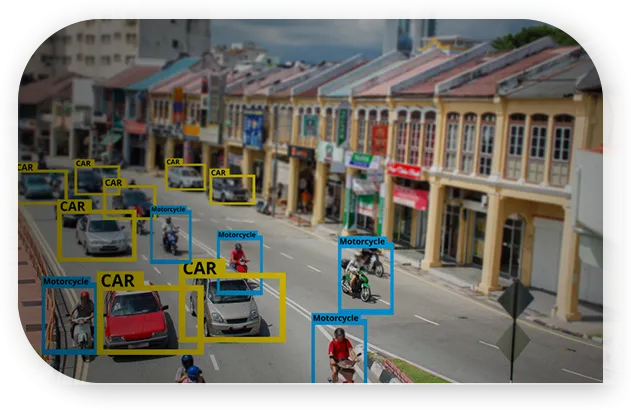
A game-changer for businesses across industries, computer vision has immense potential in transforming the way organizations operate, innovate, and compete. From extracting valuable insights from vast amounts of visual data to leveraging cutting-edge AI techniques, we employ our unique approach to problem-solving to empower your business through our AI development services
We specialize in designing tailor-made solutions that address your specific challenges, leveraging advanced analytics and machine learning to uncover hidden patterns and insights. Our data-driven strategies empower businesses to make informed decisions, optimize processes, and enhance performance across various domains.
With a strong focus on security, compliance, and scalability; our computer vision services help to seamlessly integrate AI-driven computer vision solutions into your existing systems, ensuring a smooth transition towards more intelligent and efficient operations.
Future-ready solutions leveraging computer vision
Our real-time computer vision services, combined with edge computing, enable businesses to process and analyze visual data on-site, minimizing latency and reducing the need for constant communication with the cloud. By moving computer vision processing to the edge, we help clients make faster, data-driven decisions and improve the efficiency of their operations.
By training AI models on large datasets, we can develop highly accurate and reliable computer vision systems that can:
◉ Automate visual inspection tasks, increasing productivity and reducing human error
◉ Enhance customer experiences through facial recognition and emotion analysis
◉ Enable personalized marketing by analyzing customer demographics and behavior
Through our advanced computer vision services, we can enhance cybersecurity measures by integrating advanced visual analysis techniques into security systems. By detecting anomalies and threats in real-time, our experts can help businesses protect their valuable assets.
When combined with NLP, our computer vision services can unlock new possibilities for businesses by enabling machines to understand both visual and textual information. This integration allows for:
◉ Automatic extraction of text from images / videos
◉ Sentiment analysis of user-generated content
◉ Improved accessibility for visually impaired users
Our video analytics solutions use computer vision to analyze video data in real-time, providing actionable insights for businesses. By processing and interpreting vast amounts of visual data, we can help clients optimize their operations and make informed decisions.
Revolutionizing industries with cutting-edge technologies
Take advantage of our expertise in working with powerful tools and platforms like AWS, PyTorch, Google Cloud, and Azure to create computer vision applications & solutions that accurately detect, recognize, and process real-world objects and environments. These technologies enable new possibilities in industries such as retail, healthcare, security, and manufacturing; helping enhance efficiency, automation, and user experiences.








Innovation redefined
Explore how Daffodil Software helped Reserve Bank of India (RBI) to develop an AI powered mobile app that empowers visually and hearing impaired to identify denomination of currency notes.
Watch now.
Why Daffodil Software
Recognized excellence. proven customer satisfaction





25+
Years Of Software Engineering Excellence

150+
Global Clientele

4.8
Avg CSAT Score

95%
Customer Retention Rate

1000+
Software Engineering Experts

50+
Subject Matter Experts
Tools And Technologies We Excel In
Daffodil has been an early adopter of emerging AI technologies and has built extensive experience in various programming languages, frameworks, libraries, and tools. We continuously experiment with new technologies through our in-house R&D labs and pass on the learnings to our clients for a competitive edge.


Deep dive into the powerful potential of computer vision

Rapid growth and adoption of computer vision technologies
The computer vision market has been growing at an unprecedented rate, with a projected CAGR of 7.8% from 2021 to 2028, reaching an estimated value of USD 19.1 billion by 2028. This rapid growth is fueled by the increasing demand for automation, enhanced customer experiences, and data-driven decision-making across various industries.
By investing in computer vision technologies, businesses can stay ahead of the competition, streamline their operations, and unlock new opportunities for growth. Early adopters of these technologies are already reaping the benefits, with improved efficiency, reduced costs, and increased revenue. As computer vision continues to advance, businesses that embrace this innovation will be better positioned to thrive in a rapidly evolving market landscape.
Democratization of AI and computer vision tools
The democratization of AI and computer vision tools has made it easier than ever for businesses of all sizes to access and implement these cutting-edge technologies. With the rise of open-source frameworks like TensorFlow and PyTorch, as well as user-friendly platforms like Google Cloud Vision and Microsoft Azure Cognitive Services, even smaller businesses with limited resources can now leverage computer vision capabilities.
This accessibility enables companies to experiment with and integrate computer vision into their operations without incurring significant costs or requiring extensive technical expertise. By taking advantage of these readily available tools, businesses can drive innovation, improve their offerings, and enhance their overall competitiveness in the market.
Enhancing customer experiences with computer vision
Computer vision technologies are transforming customer experiences by enabling personalized, immersive, and interactive engagements. From virtual try-on and product recommendations in retail to facial recognition for seamless authentication in banking, computer vision is helping businesses deliver more targeted and convenient services to their customers.
By investing in these technologies, companies can strengthen customer loyalty, increase satisfaction, and ultimately drive higher revenue. In addition, computer vision-powered analytics can provide valuable insights into customer behavior and preferences, allowing businesses to make data-driven decisions and continuously refine their offerings to meet evolving customer needs.
Revolutionizing industry 4.0 with computer vision
As we enter the era of Industry 4.0, computer vision is playing a pivotal role in revolutionizing manufacturing, logistics, and other industrial sectors. By enabling automation, real-time monitoring, and advanced analytics, computer vision technologies are helping businesses optimize their processes, reduce waste, and improve overall productivity. For instance, computer vision-powered quality control systems can detect defects with greater accuracy and speed than human inspectors, preventing costly recalls and enhancing product quality.
Similarly, computer vision-enabled robots can perform complex tasks with precision, increasing efficiency, and reducing the risk of workplace injuries. By investing in these technologies, businesses can position themselves at the forefront of Industry 4.0 and harness the full potential of digital transformation.
Ethical considerations and Responsible AI
As computer vision technologies become increasingly pervasive, it is essential for businesses to consider the ethical implications and strive for responsible AI development and deployment. This involves addressing potential biases in data and algorithms, ensuring transparency in AI decision-making, and respecting user privacy and consent.
By adopting a responsible approach to computer vision, businesses can build trust with their customers, partners, and regulators, while also mitigating potential risks and legal issues that may arise from unethical AI practices. As society becomes more conscious of the ethical dimensions of AI, businesses that prioritize responsible computer vision development will be better equipped to navigate the challenges and opportunities of this rapidly evolving landscape.
(item.title)+×
(item.content) && (The computer vision market has been growing at an unprecedented rate, with a projected CAGR of 7.8% from 2021 to 2028, reaching an estimated value of USD 19.1 billion by 2028. This rapid growth is fueled by the increasing demand for automation, enhanced customer experiences, and data-driven decision-making across various industries.
By investing in computer vision technologies, businesses can stay ahead of the competition, streamline their operations, and unlock new opportunities for growth. Early adopters of these technologies are already reaping the benefits, with improved efficiency, reduced costs, and increased revenue. As computer vision continues to advance, businesses that embrace this innovation will be better positioned to thrive in a rapidly evolving market landscape.
(item.title)+×
(item.content) && (The democratization of AI and computer vision tools has made it easier than ever for businesses of all sizes to access and implement these cutting-edge technologies. With the rise of open-source frameworks like TensorFlow and PyTorch, as well as user-friendly platforms like Google Cloud Vision and Microsoft Azure Cognitive Services, even smaller businesses with limited resources can now leverage computer vision capabilities.
This accessibility enables companies to experiment with and integrate computer vision into their operations without incurring significant costs or requiring extensive technical expertise. By taking advantage of these readily available tools, businesses can drive innovation, improve their offerings, and enhance their overall competitiveness in the market.
(item.title)+×
(item.content) && (Computer vision technologies are transforming customer experiences by enabling personalized, immersive, and interactive engagements. From virtual try-on and product recommendations in retail to facial recognition for seamless authentication in banking, computer vision is helping businesses deliver more targeted and convenient services to their customers.
By investing in these technologies, companies can strengthen customer loyalty, increase satisfaction, and ultimately drive higher revenue. In addition, computer vision-powered analytics can provide valuable insights into customer behavior and preferences, allowing businesses to make data-driven decisions and continuously refine their offerings to meet evolving customer needs.
(item.title)+×
(item.content) && (As we enter the era of Industry 4.0, computer vision is playing a pivotal role in revolutionizing manufacturing, logistics, and other industrial sectors. By enabling automation, real-time monitoring, and advanced analytics, computer vision technologies are helping businesses optimize their processes, reduce waste, and improve overall productivity. For instance, computer vision-powered quality control systems can detect defects with greater accuracy and speed than human inspectors, preventing costly recalls and enhancing product quality.
Similarly, computer vision-enabled robots can perform complex tasks with precision, increasing efficiency, and reducing the risk of workplace injuries. By investing in these technologies, businesses can position themselves at the forefront of Industry 4.0 and harness the full potential of digital transformation.
(item.title)+×
(item.content) && (As computer vision technologies become increasingly pervasive, it is essential for businesses to consider the ethical implications and strive for responsible AI development and deployment. This involves addressing potential biases in data and algorithms, ensuring transparency in AI decision-making, and respecting user privacy and consent.
By adopting a responsible approach to computer vision, businesses can build trust with their customers, partners, and regulators, while also mitigating potential risks and legal issues that may arise from unethical AI practices. As society becomes more conscious of the ethical dimensions of AI, businesses that prioritize responsible computer vision development will be better equipped to navigate the challenges and opportunities of this rapidly evolving landscape.
Rapid growth and adoption of computer vision technologies
The computer vision market has been growing at an unprecedented rate, with a projected CAGR of 7.8% from 2021 to 2028, reaching an estimated value of USD 19.1 billion by 2028. This rapid growth is fueled by the increasing demand for automation, enhanced customer experiences, and data-driven decision-making across various industries.
By investing in computer vision technologies, businesses can stay ahead of the competition, streamline their operations, and unlock new opportunities for growth. Early adopters of these technologies are already reaping the benefits, with improved efficiency, reduced costs, and increased revenue. As computer vision continues to advance, businesses that embrace this innovation will be better positioned to thrive in a rapidly evolving market landscape.
Democratization of AI and computer vision tools
The democratization of AI and computer vision tools has made it easier than ever for businesses of all sizes to access and implement these cutting-edge technologies. With the rise of open-source frameworks like TensorFlow and PyTorch, as well as user-friendly platforms like Google Cloud Vision and Microsoft Azure Cognitive Services, even smaller businesses with limited resources can now leverage computer vision capabilities.
This accessibility enables companies to experiment with and integrate computer vision into their operations without incurring significant costs or requiring extensive technical expertise. By taking advantage of these readily available tools, businesses can drive innovation, improve their offerings, and enhance their overall competitiveness in the market.
Enhancing customer experiences with computer vision
Computer vision technologies are transforming customer experiences by enabling personalized, immersive, and interactive engagements. From virtual try-on and product recommendations in retail to facial recognition for seamless authentication in banking, computer vision is helping businesses deliver more targeted and convenient services to their customers.
By investing in these technologies, companies can strengthen customer loyalty, increase satisfaction, and ultimately drive higher revenue. In addition, computer vision-powered analytics can provide valuable insights into customer behavior and preferences, allowing businesses to make data-driven decisions and continuously refine their offerings to meet evolving customer needs.
Revolutionizing industry 4.0 with computer vision
As we enter the era of Industry 4.0, computer vision is playing a pivotal role in revolutionizing manufacturing, logistics, and other industrial sectors. By enabling automation, real-time monitoring, and advanced analytics, computer vision technologies are helping businesses optimize their processes, reduce waste, and improve overall productivity. For instance, computer vision-powered quality control systems can detect defects with greater accuracy and speed than human inspectors, preventing costly recalls and enhancing product quality.
Similarly, computer vision-enabled robots can perform complex tasks with precision, increasing efficiency, and reducing the risk of workplace injuries. By investing in these technologies, businesses can position themselves at the forefront of Industry 4.0 and harness the full potential of digital transformation.
Ethical considerations and Responsible AI
As computer vision technologies become increasingly pervasive, it is essential for businesses to consider the ethical implications and strive for responsible AI development and deployment. This involves addressing potential biases in data and algorithms, ensuring transparency in AI decision-making, and respecting user privacy and consent.
By adopting a responsible approach to computer vision, businesses can build trust with their customers, partners, and regulators, while also mitigating potential risks and legal issues that may arise from unethical AI practices. As society becomes more conscious of the ethical dimensions of AI, businesses that prioritize responsible computer vision development will be better equipped to navigate the challenges and opportunities of this rapidly evolving landscape.
Connect for a free computer vision consulting session!

Frequently asked questions (FAQs)
Computer vision is a field of artificial intelligence (AI) that enables machines to interpret and understand visual information from the world, much like humans do. It works by using advanced algorithms and techniques to analyze images or videos, extract meaningful data, and make decisions based on that information. This process typically involves image pre-processing, feature extraction, and applying machine learning or deep learning models to recognize objects, patterns, or specific details within the visual data.
Computer vision can be applied across various industries, including retail, manufacturing, healthcare, agriculture, and security. Its applications range from automating quality control processes, enhancing surveillance systems, enabling autonomous vehicles, and improving customer experiences through personalized recommendations. By understanding your business’s unique needs, we can develop a tailor-made computer vision solution that addresses your specific challenges and helps you achieve your goals.
Computer vision can solve a wide range of problems, such as object detection and recognition, image classification, facial recognition, pattern recognition, optical character recognition (OCR), and scene understanding. It can also be used for more advanced tasks like video analytics, 3D reconstruction, and augmented reality.
Our computer vision solutions are designed to be highly customizable, ensuring they cater to your specific business needs. We leverage cutting-edge AI techniques and the latest research to develop innovative solutions that offer superior performance and accuracy. Additionally, we prioritize security, compliance, and scalability, enabling seamless integration into your existing systems and ensuring long-term success.
Yes, our computer vision solutions are designed to be compatible with a variety of systems and platforms, ensuring smooth integration into your existing workflows. We work closely with you to understand your infrastructure and requirements, making necessary adjustments and providing support throughout the implementation process.
A successful computer vision project typically requires a large dataset of labeled images or videos relevant to the problem you are trying to solve. High-quality data is essential, as it directly impacts the accuracy and performance of the solution. To ensure data quality, it’s crucial to have a diverse and representative sample, clear and consistent labeling, and proper data augmentation techniques to minimize potential biases.
We take data security and privacy very seriously. We follow industry best practices and comply with relevant data protection regulations to safeguard your data. This includes using encryption for data storage and transmission, implementing strict access controls, and conducting regular security audits. We also work with you to establish clear data handling policies and guidelines to minimize potential risks.
The timeline for implementing a computer vision solution may vary depending on factors such as project complexity, data availability, and your specific requirements. Generally, the process includes defining the problem, collecting and preparing data, developing and training models, testing and validation, and finally, integration and deployment. This could take anywhere from a few weeks to several months, but we work closely with you to ensure timely progress and successful implementation.
Yes, our computer vision solutions are designed with scalability in mind. As your business grows and your needs evolve, we can easily adapt and expand our solutions to accommodate increased demand. This might involve optimizing models for better performance, integrating with new systems, or providing additional training and support to ensure seamless operation.
We provide ongoing support and maintenance for our computer vision solutions to ensure their continued success. This includes regular updates to keep the models current with the latest research and technology advancements, as well as addressing any issues that may arise. We also offer training and resources to help your team effectively use and manage the solution, along with dedicated customer support to assist with any questions or concerns.