
Trusted by Global Tech Leaders to Disruptive Startups






Innovative digital solutions & services to help you unlock the immense potential of the cloud:










Selected success stories of our cloud application development services

Daffodil helps National Nutrition to migrate to AWS; resulting in 40% cost savings in infrastructure management
Explore Case Study
Automating infrastructure provisioning for a maritime research firm leading to a significantly reduced cloud cost
Explore Case Study
Daffodil helps Chalo to migrate to AWS cloud platform; resulting in 40% reduction in the cost of IT operations.
Explore Case StudyNavigate your business to success with our cloud application development services
Talk to our expertsReap full benefits of the cloud with:
Our cloud applications are designed to effortlessly scale up or down according to your business demands. Whether experiencing a surge in no. of users or a sudden spike in traffic, your applications can dynamically adjust to accommodate without compromising performance.
Our cloud application development experts help to minimize downtime with our high availability strategies. We engineer your cloud applications to be continuously accessible, minimizing interruptions and maintaining a consistent user experience.
Reach your audience on any device with our mobile-responsive and cross-platform compatible applications. Our cloud application development experts ensure smooth app functionality & help to deliver a consistent and optimized experience to your users.
Our solutions are designed to be flexible and customizable, accommodating specific features, workflows and integrations that are relevant to your industry and objectives.
Our cloud solutions are engineered to minimize upfront capital expenditures and ongoing operational costs. By harnessing the scalability of the cloud, you pay only for the resources you need, when you need them.
We design robust cloud applications that prioritize security and resilience, protecting your data and ensuring your applications can withstand any disruptions.

Navigating the Cloud landscape through strategic collaborations

Don't let fear of risks and costs hold you back! Discover our cost-effective cloud solutions!
Let's connect!Maximize your business efficiency with tailored cloud solutions
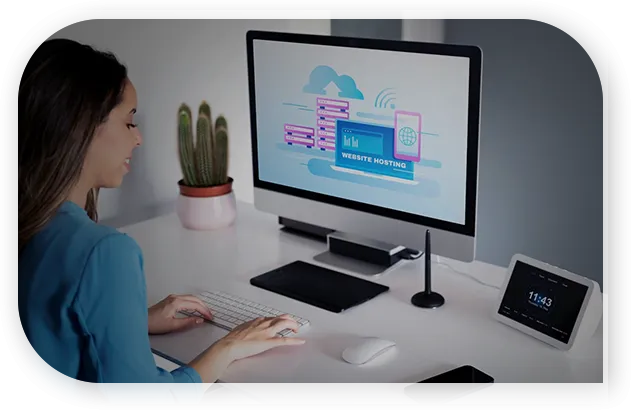
Develop robust and scalable cloud applications that not only integrate seamlessly with your existing systems but also ensure maximum security leveraging our cloud application development services. Our services are designed to provide continuous support and optimal performance, contributing to your business’s overall efficiency and productivity.
We offer bespoke solutions that align perfectly with your business objectives, ensuring that you leverage the full potential of cloud technology. Furthermore, our collaboration with leading cloud platforms such as AWS, Microsoft Azure, Google Cloud and Oracle enables us to provide you with the most advanced and reliable cloud solutions. Whether you are looking to migrate your existing applications to the cloud or develop new ones, our team of experienced professionals is equipped to guide you through every step of your cloud journey.
How we enable swift cloud application development:

Microservices
We leverage microservices architecture to break down complex applications into smaller, more manageable services. This allows for quicker updates, easier scalability, and increased resilience, accelerating the overall development process.

Containers
We use containerization technologies to package applications with their dependencies, ensuring smooth deployment across various environments. This enhances the speed and efficiency of application development and deployment.

Shift-left approach
We follow a shift-left approach, integrating testing early into the development process. This enables early detection and resolution of issues, reducing the time and cost of development.

Lean methodology
Our lean methodology focuses on delivering value to the customer by eliminating wasteful practices. This results in a streamlined development process, faster delivery times, and higher quality applications.

Automation
We employ automation tools to speed up repetitive tasks, such as testing and deployment. This not only accelerates the development process but also reduces the risk of human error.

Interoperability and portability
We ensure our cloud applications are interoperable and portable. This means they can work seamlessly across various systems and can be easily moved between different cloud environments, providing flexibility and speeding up development.
Tech challenges we help you overcome:

Legacy systems
We understand the difficulties of working with outdated technology. Our team can modernize your legacy systems, ensuring they are up-to-date, secure, and efficient. We can also integrate these systems with new technologies, extending their life and value.

Data storage & management
Managing and storing large amounts of data can be daunting. We provide solutions for efficient data storage and management, ensuring your data is secure, accessible, and easy to analyze. We can also help you migrate your data to the cloud, offering scalable and cost-effective storage solutions.

Downtime & outages
Downtime and outages can significantly impact your business operations. We implement robust strategies to minimize these incidents, such as disaster recovery plans, redundant systems, and continuous monitoring. Our team can also help you shift to a cloud-based infrastructure, known for its high availability and reliability.

Security threats
We help you implement advanced security measures to protect your systems and data from potential cyber attacks. This includes encryption, secure access controls, regular vulnerability assessments, and compliance with industry-specific security standards. Our team also provides training on best practices to further enhance your organization’s security.
Our expertise across a range of transformative technologies:
We leverage the power of edge computing in our solutions. Our applications reduce latency and enhance real-time capabilities. This ensures optimal performance and responsiveness even in bandwidth-constrained environments.
Our cloud application development services incorporate AI-driven algorithms that enable predictive analysis, intelligent automation and data-driven decision-making. From recommendation engines to NLP, our AI-powered solutions drive efficiency and innovation.
Our applications utilize blockchain technology to enhance data integrity, streamline supply chains and enable secure peer-to-peer interactions. Whether for financial transactions or supply chain management, blockchain ensures trust and accountability.
Our experts help you with big data integrations to enhance strategic planning and operational efficiency. Unlock valuable insights & drive informed decisions from large volumes of data leveraging our cloud application development services.
Seamlessly connect and manage your IoT devices through our cloud applications. We create solutions that gather, analyze and act on data from IoT devices, enabling you to monitor, control, and optimize operations in real time.
Why Daffodil Software
Recognized excellence. proven customer satisfaction





25+
Years Of Software Engineering Excellence

150+
Global Clientele

4.8
Avg CSAT Score

95%
Customer Retention Rate

1000+
Software Engineering Experts

50+
Subject Matter Experts
Innovation redefined
We create agile and adaptable cloud solutions to keep you ahead in the game, always.
Watch our brand video.
Deep dive into key insights:

Cloud Computing Models
◉ Infrastructure as a Service (IaaS): This model provides businesses with essential web infrastructure like servers, storage, and networking resources on-demand, eliminating the need to invest in and maintain their own hardware.
◉ Software as a Service (SaaS): This model allows businesses to use software applications as a service. These applications are hosted in the cloud and can be accessed via the internet, reducing the need for installing and running applications on individual devices.
◉ Platform as a Service (PaaS): This model provides a platform allowing customers to develop, run, and manage applications without the complexity of building and maintaining the infrastructure associated with developing and launching an app.
Cloud Deployment Model
◉ Public Cloud: This model provides services and infrastructure off-site over the internet. These clouds are shared among multiple users and accessible to anyone who wishes to purchase the service.
◉ Private Cloud: This model offers a similar level of scalability and self-service as a public cloud but is dedicated to a single organization, providing a higher level of security.
◉ Hybrid Cloud: This model combines public and private clouds, allowing data and applications to be shared between them. It offers greater flexibility by moving workloads between cloud solutions as needs and costs fluctuate.
Types of Cloud Application Development
◉ Cloud Native: This refers to applications that are specifically designed for cloud computing architectures. They take full advantage of cloud computing frameworks, including multi-cloud, microservices, agile methodology, containers, CI/CD, and DevOps.
◉ Hybrid Cloud: This refers to applications that are part cloud-based and part on-premise. These applications can leverage the benefits of both worlds, offering greater flexibility and options for data deployment.
◉ Multi-Cloud: This approach involves using multiple cloud computing services in a single heterogeneous architecture. This type of application can leverage the strengths of various cloud providers, increasing flexibility and mitigating risks.
(item.title)+×
(item.content) && (◉ Infrastructure as a Service (IaaS): This model provides businesses with essential web infrastructure like servers, storage, and networking resources on-demand, eliminating the need to invest in and maintain their own hardware.
◉ Software as a Service (SaaS): This model allows businesses to use software applications as a service. These applications are hosted in the cloud and can be accessed via the internet, reducing the need for installing and running applications on individual devices.
◉ Platform as a Service (PaaS): This model provides a platform allowing customers to develop, run, and manage applications without the complexity of building and maintaining the infrastructure associated with developing and launching an app.
(item.title)+×
(item.content) && (◉ Public Cloud: This model provides services and infrastructure off-site over the internet. These clouds are shared among multiple users and accessible to anyone who wishes to purchase the service.
◉ Private Cloud: This model offers a similar level of scalability and self-service as a public cloud but is dedicated to a single organization, providing a higher level of security.
◉ Hybrid Cloud: This model combines public and private clouds, allowing data and applications to be shared between them. It offers greater flexibility by moving workloads between cloud solutions as needs and costs fluctuate.
(item.title)+×
(item.content) && (◉ Cloud Native: This refers to applications that are specifically designed for cloud computing architectures. They take full advantage of cloud computing frameworks, including multi-cloud, microservices, agile methodology, containers, CI/CD, and DevOps.
◉ Hybrid Cloud: This refers to applications that are part cloud-based and part on-premise. These applications can leverage the benefits of both worlds, offering greater flexibility and options for data deployment.
◉ Multi-Cloud: This approach involves using multiple cloud computing services in a single heterogeneous architecture. This type of application can leverage the strengths of various cloud providers, increasing flexibility and mitigating risks.
Cloud Computing Models
◉ Infrastructure as a Service (IaaS): This model provides businesses with essential web infrastructure like servers, storage, and networking resources on-demand, eliminating the need to invest in and maintain their own hardware.
◉ Software as a Service (SaaS): This model allows businesses to use software applications as a service. These applications are hosted in the cloud and can be accessed via the internet, reducing the need for installing and running applications on individual devices.
◉ Platform as a Service (PaaS): This model provides a platform allowing customers to develop, run, and manage applications without the complexity of building and maintaining the infrastructure associated with developing and launching an app.
Cloud Deployment Model
◉ Public Cloud: This model provides services and infrastructure off-site over the internet. These clouds are shared among multiple users and accessible to anyone who wishes to purchase the service.
◉ Private Cloud: This model offers a similar level of scalability and self-service as a public cloud but is dedicated to a single organization, providing a higher level of security.
◉ Hybrid Cloud: This model combines public and private clouds, allowing data and applications to be shared between them. It offers greater flexibility by moving workloads between cloud solutions as needs and costs fluctuate.
Types of Cloud Application Development
◉ Cloud Native: This refers to applications that are specifically designed for cloud computing architectures. They take full advantage of cloud computing frameworks, including multi-cloud, microservices, agile methodology, containers, CI/CD, and DevOps.
◉ Hybrid Cloud: This refers to applications that are part cloud-based and part on-premise. These applications can leverage the benefits of both worlds, offering greater flexibility and options for data deployment.
◉ Multi-Cloud: This approach involves using multiple cloud computing services in a single heterogeneous architecture. This type of application can leverage the strengths of various cloud providers, increasing flexibility and mitigating risks.
Connect with our experts for seamless cloud development!

Frequently asked questions (FAQs)
The process of moving to a cloud application is done in phases to ensure minimal disruption. It includes careful planning, testing, and implementation with the aim of enhancing business operations rather than disrupting them. The transition process also often includes training for your team to ensure smooth operation.
Yes. Our cloud application development services will help you at every stage with:
◉ User-friendly Interface: Cloud applications are designed with user-friendly interfaces that are easy to navigate, even for non-tech savvy individuals.
◉ Training: Providers usually offer training and support to help you understand how to use and manage the application.
◉ Support: Ongoing technical support is typically available to assist with any challenges or questions you may have.
Developing a cloud application starts with understanding your business needs and objectives. This is followed by planning and designing the application structure. The development stage involves coding and integrating functionalities, after which the application goes through rigorous testing for bugs and performance issues. Once everything is refined, the application is deployed to the cloud.
A simple application might take a few weeks to develop and implement, while a complex one might take several months. The timeline includes stages of planning, designing, development, testing, and deployment. It’s essential to maintain open communication with your cloud service provider to ensure the project stays on track.