Trusted by Industry Leading Healthcare Brands and Next-gen Startups


Key features of our remote patient monitoring software solutions:



Selected success stories of remote patient monitoring solutions
Developing a comprehensive EHR system for the largest eye care group in the United States
Explore Case Study
Developing an AI-powered telehealth application for a US-based health tech firm
Explore Case Study
New York's leading hospital reduces door to balloon time for STEMI patients through an emergency response app
Explore Case StudySet-up a free consultation with our remote patient monitoring solutions experts!
Talk to our expertsFeatures we can help you develop for your remote patient monitoring solution
 Appointment scheduling and management
 Automated notifications & alerts
 IoT integration
 Wearable integration
 Data collection and monitoring
 Medical adherence management
 Accessibility features
 Real-time data transmission
 Care coordination
 Voice command integration


Enhancing care delivery with custom RPM solutions
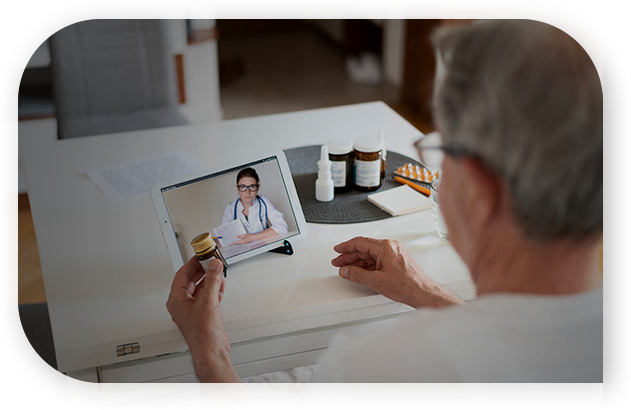
Remote patient monitoring (RPM) has undergone significant advancements in recent times. What was earlier limited to medical devices for monitoring health vitals, such as heart rate, blood pressure, or sugar levels has now transitioned to portable, mobile-based tracking solutions, backed by modern technology.
Today, we have remote patient monitoring solutions in the form of wearable sensors, telemedicine platforms, and mobile apps. These devices monitor a wide range of patient vitals including heart rate variability, activity levels, sleep patterns, respiratory rate, etc. Based on continuous monitoring of health vitals, patients can have personalized feedback, alerts, and educational resources to act on the problems (regarding medication, schedule appointments, etc.).
Daffodil Software, with its domain expertise in healthcare software development, has been enabling healthcare providers in improving the delivery of care with custom RPM solutions. These solutions are backed by modern technologies like Artificial Intelligence, the Internet of Things (IoT), Business Intelligence, etc. to identify trends, predict risk conditions, & offer personalized treatments.
Our healthcare IT experts will help you:
With remote patient monitoring solutions, healthcare providers have the opportunity to monitor patients outside of their care ecosystem. This prevents re-admissions & emergency admits by detecting potential health issues before they become serious.
Remote patient monitoring solutions encourage patients to have an active role in improving their health. Since patients get access to their health data, they take relevant actions to improve them. This makes their course of treatment more impactful.
With regular monitoring of vital signs, symptoms, and medication adherence, healthcare providers can adjust treatment plans and offer personalized care, ultimately enabling better chronic disease management.
With remote care monitoring solutions, providers ascertain that care is not limited to in-person consultations. The patients, even from remote locations can book appointments digitally at their convenience while ensuring that they receive the best care possible.
RPM solutions help to provide personalized care that meets the needs and preferences of an individual. With this, it has the potential to improve the quality of care, increase patient engagement, and reduce healthcare costs for patients, thereby improving their satisfaction.
Remote patient monitoring solutions help manage diseases more effectively with improved medication adherence, educational resources to understand health condition better, real-time data to manage potential health issues proactively. Thus reducing readmission rates.
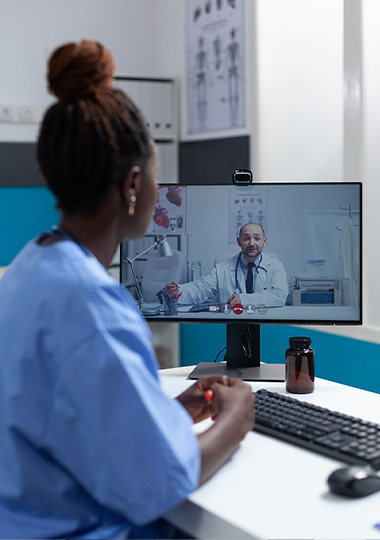
See what our clients have to say about our remote patient monitoring solutions

Chandrasekar Rathakrishnan
CRO, IAMPLUS LLC
““They’ve been quick to mentor and replace resources as needed to ensure deliverables are met. Unlike most agencies that get comfortable, Daffodil consistently follows up to improve.””

Dr. Paresh Vasani
Director, Vital Quest
““Compared to the first company we worked with, which provided no feedback, Daffodil provides constant feedback and adapts to ensure smooth workflow. They are open to changes and communicate well, always offering solutions.””
Dr. Rehman
Co-founder & CEO, VivoDoc
Mark Kozak
Co-Founder, MayaMD
Mohmammad Ghazi
Business Manager, Siemens Healthineers

Rohit Moza
Product Manager, Self Care Catalysts
““They are very flexible and will do everything possible to meet the client’s needs. They completed the project on time. Users loved the new UX/UI. We’re very happy with their service and wouldn’t change a thing.””

Steven Houston III
CEO & Co-Founder, HealTheia
““We have an excellent MVP that exceeds our initial expectations. Their work quality and communication were excellent.””
Steven Houston
CEO/Co-Founder, HealTheia
Chandrasekar Rathakrishnan
CRO, IAMPLUS LLC
““They’ve been quick to mentor and replace resources as needed to ensure deliverables are met. Unlike most agencies that get comfortable, Daffodil consistently follows up to improve.””
Dr. Paresh Vasani
Director, Vital Quest
““Compared to the first company we worked with, which provided no feedback, Daffodil provides constant feedback and adapts to ensure smooth workflow. They are open to changes and communicate well, always offering solutions.””
Dr. Rehman
Co-founder & CEO, VivoDoc
Mark Kozak
Co-Founder, MayaMD
Mohmammad Ghazi
Business Manager, Siemens Healthineers
Rohit Moza
Product Manager, Self Care Catalysts
““They are very flexible and will do everything possible to meet the client’s needs. They completed the project on time. Users loved the new UX/UI. We’re very happy with their service and wouldn’t change a thing.””
Steven Houston III
CEO & Co-Founder, HealTheia
““We have an excellent MVP that exceeds our initial expectations. Their work quality and communication were excellent.””
Steven Houston
CEO/Co-Founder, HealTheia
Build custom applications for every stakeholder in the RPM journey

Patient portal
A primary interface for patients to provide health-related information, receive instructions, and communicate with healthcare providers. It contains all the essential features like registration and profile management, health data input, educational resources, secure messaging, appointment scheduling, alerts, and reminders.

Admin portal
An interface for the administrator to manage the entire remote patient monitoring system. It provides tools and functionalities to configure and maintain the system. The key features consist of user management, system configuration, analytics and reporting, system maintenance, updating appointment schedules, and accepting/canceling appointments.

Medical staff portal
A dedicated interface for healthcare providers, including doctors, nurses, and other medical professionals. It allows them to monitor and manage their patient’s health remotely. Key functionalities include patient data access, real-time monitoring of vitals, symptoms, etc., data analysis & decision support, prescription management, and communication & collaboration.

Cloud server
It acts as the central repository for storing and processing patient data in a secure and scalable manner. All the data transmission between the patient portals, medical staff portals, and integrated smart medical devices happens here. It provides facilities like data storage and retrieval, data processing and analytics, security and privacy, and integration with external systems.

Smart medical devices
Smart medical devices are hardware components (eg. blood pressure monitors, glucose meters, pulse oximeters, etc.) that collect and transmit patient health data to the remote patient monitoring system. The devices typically connect to the patient’s smartphone or directly to the cloud server via wireless communication protocols like Bluetooth, Wi-Fi, NFC etc.
They capture real-time physiological data and transmit it securely to the system for monitoring and analysis. It then transfers the data to healthcare providers via the communication infrastructure. A mobile app or a dedicated device is connected to these devices that does data visualization and alerts for abnormal readings.
Why Daffodil Software
Recognized excellence. proven customer satisfaction




25+
Years Of Software Engineering Excellence

150+
Global Clientele

4.8
Avg CSAT Score

95%
Customer Retention Rate

1000+
Software Engineering Experts

50+
Subject Matter Experts
Elevate RPM efficiency with:
Machine learning can enhance RPM solutions by leveraging its pattern recognition capabilities, data analytics, and automation capabilities to achieve improved outcomes. Here are a few ways in which Artificial Intelligence & Machine Learning can help create an accurate diagnosis, personalized treatments, and a more efficient care delivery system.
Daffodil Software provides customized assistive technology solutions to improve the quality of life of patients with physical limitations. We have developed an AI-based solution for converting sign language into speech to aid hearing-impaired patients. Our solutions for visually challenged patients include text-to-speech readers, GPS devices with audio navigation, IOT-enabled mobility devices, and braille watches. We also work with clients to create custom solutions as per their requirements.
In remote patient monitoring solutions, Machine Learning (ML) can be utilized to analyze large amounts of patient data. This can help in identifying patterns & trends that predict health risks such as disease progression or likelihood of hospitalization.
IoT-based medical devices have a pivotal role in remote patient monitoring. For example, IoT-based wearable devices are a go-to option for health and wellness tracking these days. Smartwatches, fitness trackers, and other monitoring devices are popularly used for tracking health vitals such as blood pressure, heart rate, oxygen saturation levels, etc. This enables the providers to deliver long-term preventive care to patients with chronic conditions, without having them leave their homes.
Standards and compliance
Our remote patient monitoring solutions strictly adhere to medical standards and compliances. Data security is the cornerstone of our software solutions. Our policies ensure data interoperability and secure electronic access. We comply with standards for exchanging, integrating, sharing, and retrieving electronic health information. We also follow International standards to transmit, store, retrieve, print, process, and display medical imaging information.








Innovation redefined
Discover how the Daffodil Software developed an AI-powered telehealth application for MayaMD. The application can track over 10,000 symptoms and conditions, and suggest underlying diseases with 94% accuracy.
Watch now.
Prominent medical specialties that use remote patient monitoring solutions:

Cardiology remote patient monitoring
In cardiology, remote patient monitoring helps to monitor and manage patients with heart disease, outside of the traditional healthcare setting. Several wearable devices can track blood pressure, heart rate, rhythm rate, and activity levels. Based on continuous monitoring, the cardiologists are in a better position to suggest the medication, diet, exercise, or other lifestyle changes that could make the cardiac activities normal.
Another advantage of cardiology remote patient monitoring solutions is that they help in improving patient outcomes with early detection of potential problems. Since cardiac activities are consistently monitored, it helps the providers to offer personalized treatment plans that ensure better & quick outcomes. RPM tools also help to reduce hospitalizations and emergency department visits.
Pulmonary remote patient monitoring
In the United States, COPD affects 15 million adults & half of those diagnosed are women. Chronic obstructive pulmonary disease is the fourth leading cause of death in the US, confirms the Centers for Disease Control and Prevention (CDC).
RPM devices are harnessed with sensors and modern technologies that help to collect and transmit data on patients’ oxygen levels, breathing levels, and necessary health vitals. For example, RPM solutions such as Smart Inhalers are patient adherence tools to manage problems such as COPD, Asthma, or pulmonary fibrosis. These remote patient monitoring solutions collaborate with telemedicine solutions that help patients & pulmonologists take informed decisions for treatment.
RPM devices along with telemedicine solutions allow pulmonologists to monitor patients remotely and call them for visits only when additional information is needed.
Endocrine remote patient monitoring
Endocrinology focuses on the diagnosis, treatment, and management of disorders related to endocrine glands in the body. RPM solutions help in monitoring chronic conditions such as diabetes, osteoporosis, thyroid, etc.
In the United States, diabetes is the eighth leading cause of death, confirms the Centers for Disease Control and Prevention (CDC). And diabetes is a chronic disorder that requires consistent tracking and measures to keep health under control.
RPM devices such as glucose monitors, bone density scanners, insulin pumps, etc. help track and maintain glucose levels. The real-time data is shared with providers for analysis that helps in providing precise treatment & diet plans, which is just right for the patient.
(item.title)+×
(item.content) && (In cardiology, remote patient monitoring helps to monitor and manage patients with heart disease, outside of the traditional healthcare setting. Several wearable devices can track blood pressure, heart rate, rhythm rate, and activity levels. Based on continuous monitoring, the cardiologists are in a better position to suggest the medication, diet, exercise, or other lifestyle changes that could make the cardiac activities normal.
Another advantage of cardiology remote patient monitoring solutions is that they help in improving patient outcomes with early detection of potential problems. Since cardiac activities are consistently monitored, it helps the providers to offer personalized treatment plans that ensure better & quick outcomes. RPM tools also help to reduce hospitalizations and emergency department visits.
(item.title)+×
(item.content) && (In the United States, COPD affects 15 million adults & half of those diagnosed are women. Chronic obstructive pulmonary disease is the fourth leading cause of death in the US, confirms the Centers for Disease Control and Prevention (CDC).
RPM devices are harnessed with sensors and modern technologies that help to collect and transmit data on patients’ oxygen levels, breathing levels, and necessary health vitals. For example, RPM solutions such as Smart Inhalers are patient adherence tools to manage problems such as COPD, Asthma, or pulmonary fibrosis. These remote patient monitoring solutions collaborate with telemedicine solutions that help patients & pulmonologists take informed decisions for treatment.
RPM devices along with telemedicine solutions allow pulmonologists to monitor patients remotely and call them for visits only when additional information is needed.
(item.title)+×
(item.content) && (Endocrinology focuses on the diagnosis, treatment, and management of disorders related to endocrine glands in the body. RPM solutions help in monitoring chronic conditions such as diabetes, osteoporosis, thyroid, etc.
In the United States, diabetes is the eighth leading cause of death, confirms the Centers for Disease Control and Prevention (CDC). And diabetes is a chronic disorder that requires consistent tracking and measures to keep health under control.
RPM devices such as glucose monitors, bone density scanners, insulin pumps, etc. help track and maintain glucose levels. The real-time data is shared with providers for analysis that helps in providing precise treatment & diet plans, which is just right for the patient.
Cardiology remote patient monitoring
In cardiology, remote patient monitoring helps to monitor and manage patients with heart disease, outside of the traditional healthcare setting. Several wearable devices can track blood pressure, heart rate, rhythm rate, and activity levels. Based on continuous monitoring, the cardiologists are in a better position to suggest the medication, diet, exercise, or other lifestyle changes that could make the cardiac activities normal.
Another advantage of cardiology remote patient monitoring solutions is that they help in improving patient outcomes with early detection of potential problems. Since cardiac activities are consistently monitored, it helps the providers to offer personalized treatment plans that ensure better & quick outcomes. RPM tools also help to reduce hospitalizations and emergency department visits.
Pulmonary remote patient monitoring
In the United States, COPD affects 15 million adults & half of those diagnosed are women. Chronic obstructive pulmonary disease is the fourth leading cause of death in the US, confirms the Centers for Disease Control and Prevention (CDC).
RPM devices are harnessed with sensors and modern technologies that help to collect and transmit data on patients’ oxygen levels, breathing levels, and necessary health vitals. For example, RPM solutions such as Smart Inhalers are patient adherence tools to manage problems such as COPD, Asthma, or pulmonary fibrosis. These remote patient monitoring solutions collaborate with telemedicine solutions that help patients & pulmonologists take informed decisions for treatment.
RPM devices along with telemedicine solutions allow pulmonologists to monitor patients remotely and call them for visits only when additional information is needed.
Endocrine remote patient monitoring
Endocrinology focuses on the diagnosis, treatment, and management of disorders related to endocrine glands in the body. RPM solutions help in monitoring chronic conditions such as diabetes, osteoporosis, thyroid, etc.
In the United States, diabetes is the eighth leading cause of death, confirms the Centers for Disease Control and Prevention (CDC). And diabetes is a chronic disorder that requires consistent tracking and measures to keep health under control.
RPM devices such as glucose monitors, bone density scanners, insulin pumps, etc. help track and maintain glucose levels. The real-time data is shared with providers for analysis that helps in providing precise treatment & diet plans, which is just right for the patient.
Your first remote patient monitoring consulting session is on us!

Frequently asked questions (FAQs)
Remote patient monitoring is a critical component of patient engagement solutions. While a few components of RPM solutions (such as video conferencing) are used by several medical practices, there are only a few that utilize RPM to a great extent. Cardiology, pulmonology, gastroenterology, endocrinology, internal medicine, bariatrics, etc. are some of the medical specialties that make the most of remote patient monitoring solutions to track health vitals.
Remote patient monitoring is a sub-category of homecare telehealth that allows patients to track their health through mobile medical devices (like wearables) to gather vitals. These vitals are then shared with providers for data-driven decision-making for treatments.
In RPM settings, patients are equipped with clinical-grade devices to record biometric readings. These recordings help in studying the fluctuations in health vitals, which makes it convenient for physicians to define a treatment plan (including medication, diet, exercise, etc.).
RPM apps store a lot of patient health information (PHI). To ensure that authorized parties securely access this data and is never shared without the patient’s consent, remote patient monitoring solutions follow the much-needed compliance and regulations for data security, such as HIPAA compliance.
There are three primary partnership models that Daffodil Software operates on:
1. Full-cycle EHR software development
If you have a product/service idea in mind, we have the resources to bring it to life. Our team of dedicated developers can deliver top-of-the-line healthcare solutions without compromising on quality & timelines.
2. EHR/EMR software consulting
Looking for a fresh perspective on your current services? Or, are you grappling with a software roadblock you wish to correct? Our team of healthcare consultants can help solve all your software woes.
3. Team augmentation
Augment your teams with talented resources that can add real value to your project development process.
Daffodil Software follows a flexible cost estimation model that changes as per the project requirements and resource utilization. We first prepare a project scope and its phases to understand how much time would be required at each stage of the development process and how many developers will be required to complete the project on time. Further, a quote is suggested considering the deliverables’ complexity.